
Count Risers and Measure Tread Thickness
From How to Measure Stairs That Are Different Widths · Step 8 of 8 · Video by MS tiles and marble fitting
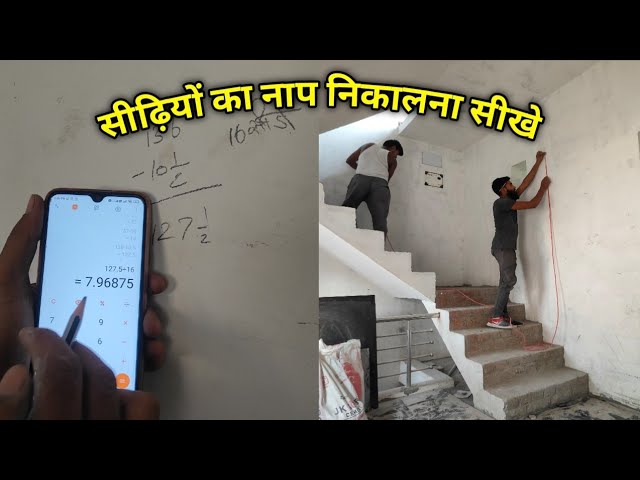
Showing 1:29–2:36 of the source video. Watch the full video with every moment.
What happens in this clip
The presenter counts the number of existing risers (steps) from the top landing down to the bottom floor, noting each one. Then, he measures the thickness of one of the granite treads that will be installed on the stairs. He confirms that the staircase has 16 risers and that each granite tread has a thickness of 10.5 inches.
Goal: Determine the number of risers and tread thickness
What's used
Tools
- Measuring Tape
- Pencil/Marker
Materials
- Granite Treads
- Wood treads
- Concrete treads
About the full video
This project provides a detailed guide on how to accurately measure for the installation of granite treads and risers on a staircase. It covers two primary methods: direct measurement using a laser level and tape measure, and an alternative method using a water level for more complex layouts. The process emphasizes calculating the uniform height of each riser to ensure a consistent and safe staircase.
Step 8 of 8: Document All Measurements
Compile all recorded measurements: total rise, number of risers, exact riser height, total run, number of treads, exact tread depth, and stair width(s). Document these on a notepad, in a digital file, or directly on your project plans.
Every video in How to Measure Stairs That Are Different Widths
Step 1: Measure Total Rise
- 0:15–0:29 Measure Total Rise
- 0:04–0:30 Measure Total Rise
- 0:46–2:06 Measure Total Rise
Step 2: Determine Number of Risers
- 0:32–0:54 Calculate Number of Risers
- 0:28–1:03 Calculate Approximate Number of Risers
- 7:42–8:55 Calculate Number of Risers
Step 3: Calculate Exact Riser Height
- 4:32–5:10 Calculate Individual Riser Height
- 1:03–1:44 Calculate Riser Height (Option 1)
- 0:23–1:30 Calculate Unit Rise
Step 4: Measure Total Run
- 0:15–0:29 Measure Total Rise
- 2:06–3:02 Measure Total Run
- 6:51–8:30 Calculate Total Run
Step 5: Determine Number of Treads
Step 6: Calculate Exact Tread Depth
- 2:05–2:24 Calculate Individual Riser Height & Tread Depth
- 1:31–2:57 Calculate Unit Run and Total Run
- 0:29–1:07 Calculate Rise and Run
Step 7: Measure Stair Width
- 7:25–8:46 Measure Winder Steps Width
- 0:00–0:03 Measure Individual Stair Components
- 7:30–8:50 Measure Total Width of Stair Opening
Step 8: Document All Measurements
- 0:01–0:11 Measure Total Rise
- 1:29–2:36 Count Risers and Measure Tread Thickness (this video)
- 22:56–30:46 Add Dimensions and Export Drawing
Questions about How to Measure Stairs That Are Different Widths
What are the most crucial tools for accurately measuring stairs, particularly when they have varying widths?
A reliable 25 ft. tape measure is indispensable for all dimensions. While not strictly a 'tool' for measuring, a straight edge like the described writing desk can help establish a consistent reference line across uneven or varying tread widths for more accurate width measurements. The ProjectCalc calculator aids in precise rise and run calculations.
How do I ensure my width measurements are accurate and consistent when the stair treads themselves are not uniform?
When treads vary in width, measure at multiple points along each tread (e.g., front, middle, back, and at both ends). Document the narrowest, widest, and average dimensions. For replacement or modification, you may need to use the maximum width or create a template to capture the exact contour of the irregular treads.
What are common mistakes beginners make when measuring stairs, and how can I avoid them?
A common mistake is assuming all risers and treads are identical; always measure each one individually, especially for older stairs. Another error is not accounting for the thickness of any new materials. Double-check all measurements, particularly the total rise and run, against the sum of individual risers and treads to catch discrepancies.
Why is it critical to get exact measurements for every part of the stairs, including individual riser heights and tread depths?
Exact measurements are paramount for safety and comfort. Even slight variations in riser height can create a tripping hazard, while inconsistent tread depths can feel awkward. Precise data ensures that any construction, modification, or replacement fits perfectly and meets building code requirements.
Are there any safety precautions I should take while performing these measurements?
Ensure the staircase is well-lit and clear of any clutter that could cause a trip. Maintain stable footing and use a step stool or ladder if necessary to reach higher points safely. If the stairs are rickety or damaged, address those issues before taking measurements to avoid falls.
How long should a beginner expect to spend on this stair measurement project?
While the estimated time is 2 hours, a beginner should plan for 2-3 hours to ensure thoroughness and accuracy. Taking extra time to double-check every measurement and carefully document your findings will prevent costly errors down the line.
How to Measure Stairs That Are Different Widths
Outline for measuring stairs with varying widths, focusing on consistent and accurate data collection for any DIY project involving stair construction, modification, or replacement.
Read the full guide Browse all guides
Planning this project? Shop Oak Valley Designs.

Subscribe for exclusive updates
Be the first to know about promotions, new products, and sales.