Construct Remaining Steps and Treads
From Landscape Steps · Step 7 of 8 · Video by Jason Sipe
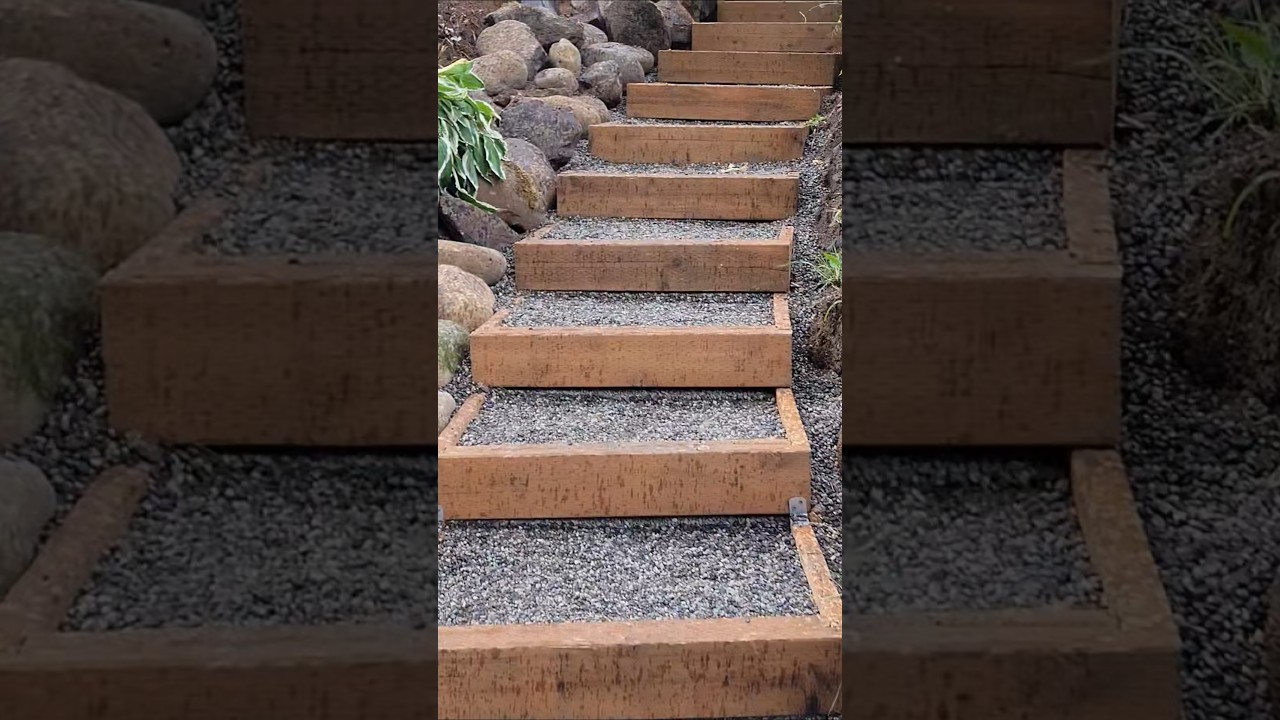
Showing 0:07–0:14 of the source video.
What happens in this clip
Determine your desired rise (height) and run (depth) for each step. Typically, a rise of 6-7 inches and a run of 12-18 inches is comfortable. Place the second timber riser above and behind the first, maintaining the chosen rise and run. Use your level to ensure it's horizontal. Secure this timber with rebar stakes. The area between the first and second timbers forms the tread. Line this area with landscape fabric to suppress weeds. Then, fill the tread with pea gravel, spreading it evenly and compacting it firmly with a hand tamper or your feet. Repeat this process for all subsequent steps, progressively moving up the slope. For enhanced stability, especially on wider stairs or turns, use L-shaped metal brackets at the corners of timbers and secure them with screws or nails. Continue until all desired steps are constructed.
Goal: Form the stair structure with risers and gravel treads
What's used
Tools
- Drill
- Hand Tamper
- Landscape Fabric
- Level
- Measuring Tape
- Metal Brackets (L-shaped)
- as seen in the video.
- Pea Gravel
- River rock (smaller sizes)
- Rebar Stakes
- Screws/Nails
- Sledgehammer
- Wooden Timbers
About the full video
This project involves constructing a set of durable and aesthetically pleasing outdoor stairs using wooden timbers for risers and filling the treads with pea gravel. The design is ideal for navigating sloped terrain and integrates naturally with the surrounding landscape, often incorporating large rocks for a rustic look.
Step 7 of 8: Construct Subsequent Steps
Using the layout marks, repeat steps 2 through 6 for each subsequent step. Ensure each new step's excavation starts at the back of the previous step's tread, creating a continuous series of steps.
Other videos for this step
Landscape Steps
This project involves constructing timber and gravel steps on a slope to improve accessibility and aesthetics. The process includes planning the layout, excavating the area, building retaining walls for each step using timber, and filling the steps with compacted gravel for a durable and functional surface.
Read the full guide Browse all guides
Planning this project? Shop Oak Valley Designs.