
Calculate Stair Dimensions and Stringer Type
From How to Measure Deck Stair Stringer Length · Step 5 of 6 · Video by decks.com
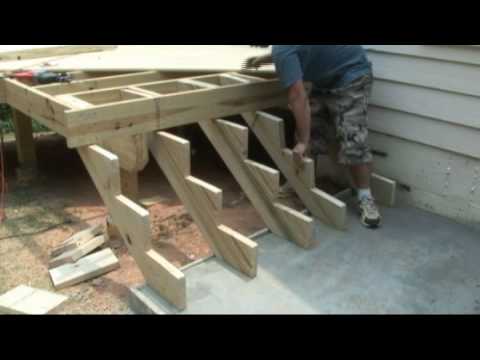
Showing 0:19–0:57 of the source video. Watch the full video with every moment.
What happens in this clip
Once the total height is established, determine whether your stair stringers will be 'inside mounted' (attached between joists) or 'outside mounted' (attached to the outside face of the rim joist). Next, use a specialized online stair calculator, such as the one mentioned at decks.com, to input the total height and your chosen run dimension (e.g., 10 1/2 inches). The calculator will output the precise number of stairs required, along with the exact rise and run for each step (for instance, a 7-inch rise and 10 1/2-inch run as shown). Based on your selected stringer attachment style, specific adjustments must be made when cutting the stringer: for inside mount stringers, remove the thickness of the outside joist from the inside of the top rise; for outside mount stringers, remove the thickness of the riser board from the back of the stringer. In both scenarios, the thickness of the tread board should be removed from the bottom of the stringer to ensure the first tread sits correctly on the landing.
Goal: Determine the precise rise, run, and number of steps, accounting for stringer attachment style and material thickness.
What's used
Tools
- Computer/Internet Access
- Pencil
About the full video
This project provides a comprehensive, step-by-step guide to constructing and installing deck stairs. It covers initial measurements, calculating rise and run for stringers, cutting the stringers, two methods for attaching stringers to the deck frame, and finally, installing the decking boards for treads and risers.
Step 5 of 6: Calculate Diagonal Stringer Length
Use the Pythagorean theorem (a² + b² = c²) where 'a' is the total rise, 'b' is the total run, and 'c' is the diagonal length of the stringer. Alternatively, use a framing square's stair gauges or a stair calculator app/tool. This calculation gives you the length of the hypotenuse of the right triangle formed by the rise and run.
Every video in How to Measure Deck Stair Stringer Length
Step 1: Measure Total Rise
- 0:17–0:31 Measure Total Rise
- 0:34–1:02 Determine Total Rise
- 0:09–0:18 Measure Total Stair Height
Step 2: Determine Riser Height
- 1:02–2:45 Calculate Riser Dimensions
- 0:51–1:37 Calculate Individual Step Rise and Total Run
- 4:32–5:10 Calculate Individual Riser Height
Step 3: Calculate Number of Treads
- 0:54–1:13 Determine Number of Treads
- 3:54–5:04 Calculate the Number of Treads and Understand the Logic
- 2:59–6:51 Calculate Number of Risers and Treads
Step 4: Determine Run Per Tread
- 1:13–1:29 Calculate Total Run
- 1:31–2:57 Calculate Unit Run and Total Run
- 10:55–11:31 Calculate Overall Run (Treads)
Step 5: Calculate Diagonal Stringer Length
- 0:20–0:39 Calculate Stringer Length with Rise and Run
- 7:31–8:06 Calculate, Layout, and Cut Stringers
- 0:19–0:57 Calculate Stair Dimensions and Stringer Type (this video)
Step 6: Mark Stringer Lumber
- 6:12–7:01 Marking the Stringers
- 0:57–1:08 Lay Out and Cut the First Stringer
- 1:41–2:21 Mark Stringer Notches
How to Measure Deck Stair Stringer Length
This project outlines the process of accurately measuring and calculating the required length for deck stair stringers. It involves determining the total rise, the run of each step, and accounting for the angle of the stairs to ensure a safe and consistent tread depth and riser height. The final measurement will be used to mark and cut the stringers from lumber.
Read the full guide Browse all guides
Planning this project? Shop Oak Valley Designs.

Subscribe for exclusive updates
Be the first to know about promotions, new products, and sales.