
Patch Old Baluster Holes
From Baluster Replacement · Step 3 of 6 · Video by This Old House
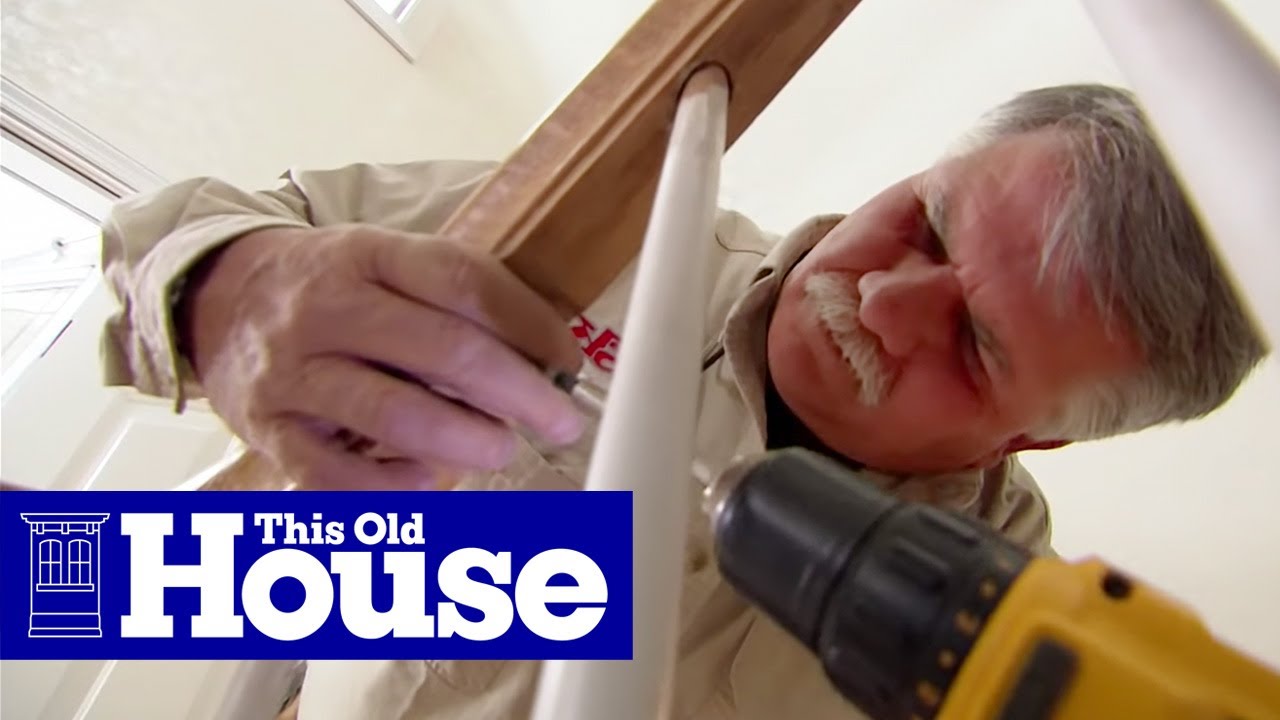
Showing 0:17–1:26 of the source video.
What happens in this clip
Before installing new stair parts, patch the old baluster holes on the stair treads. First, use a drill with a Forstner bit to enlarge the existing baluster holes. To prevent the drill bit from wandering, place a wooden guide block with a pre-drilled hole of the correct size over the existing baluster hole, centering it precisely. Then, drill through the guide block into the stair tread. Apply wood glue around the edges of 1-inch diameter, 3/16-inch thick oak plugs and tap them into the newly enlarged holes using a hammer until they are flush. Once the glue is dry, sand the patched areas smooth with an orbital sander to prepare for the new baluster placement.
Goal: Patch old baluster holes to prepare for new baluster placement
What's used
Tools
- Cordless Drill DeWalt
- Depth Gauge Block DIY
- Forstner Bit
- Hammer
- Orbital Sander Festool
- Sanding block
- Wooden Guide Block DIY
Materials
- Oak Plugs
- Wood Glue
About the full video
This project details the process of replacing an old stair railing with a new one, focusing on precise measurements, specialized tools, and secure fastening techniques. It covers patching old baluster holes, preparing and joining handrail components, accurately marking and drilling new baluster holes, and finally, installing the balusters and securing the handrail.
Step 3 of 6: Prepare New Baluster Mounting Points
Remove any old adhesive, paint residue, or wood splinters from the mounting surfaces. Use a scraper or sandpaper to create a smooth and clean surface for the new baluster attachments. Ensure the holes or mortises where the balusters will sit are clear of debris.
Baluster Replacement
This project involves removing existing wooden balusters and installing new wrought iron balusters for a staircase or railing. The process typically includes measuring, cutting, and securely attaching the new balusters while ensuring they meet safety and code requirements.
Read the full guide Browse all guides
Planning this project? Shop Oak Valley Designs.

Subscribe for exclusive updates
Be the first to know about promotions, new products, and sales.