
Site Assessment and Initial Clearing
From How to Build Backyard Steps with Railroad Ties or Landscape Timbers · Step 1 of 7 · Video by Skill Builder
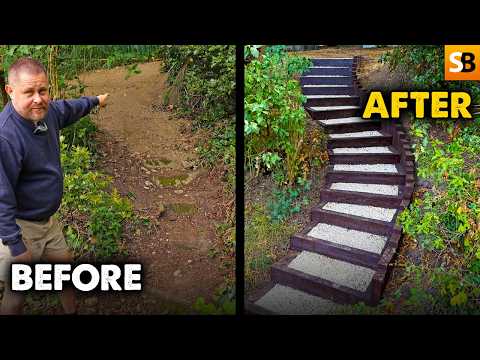
Showing 0:01–0:59 of the source video. Watch the full video with every moment.
What happens in this clip
Begin by assessing the embankment where the steps will be built. Use a long straight edge (e.g., a long spirit level or a string line) and a peg to mark the landing point for the top step. Measure the total 'run' (horizontal distance) from the top landing point to the base of the embankment and the 'rise' (vertical height) to determine the number and depth of steps required. In this project, the overall run was 255 inches and the overall rise was 92 inches. Before starting construction, clear any existing hardcore, debris, or vegetation from the area. A tipper truck can be used to efficiently remove larger quantities of material.
Goal: Prepare the site and determine step dimensions.
What's used
Tools
- Long Straight Edge/String Line
- Laser level
- Measuring Tape
- Surveying equipment
- Pegs
- Small wooden posts
- Shovel
- Rake
- Tipper Truck SJ Ward Builders (visible in video)
- Skip (dumpster)
About the full video
This project guides you through the process of building durable and aesthetically pleasing steps up a garden embankment using railway sleepers. It involves initial site preparation, precise timber cutting and assembly, careful excavation and concrete bedding for each step, reinforcement with rebar pins, installation of a weed barrier, and filling with MOT Type 1 and decorative chippings. An optional retaining wall built from the same sleepers is also detailed to address soil erosion.
What's said in this clip
So, we're going to form some steps up this embankment. It's really tricky for the client to get up there, so we're going to make it easier. We're going to clear this hardcore away first, cuz it's right in our way, as usual. We've set a peg in. This will be our landing point for our top step. And down there, you can see a bit of cant rail with that post. This is so we can get our overall run. So, we put a level what we I've used a really long straight edge and attach it to there, measured that, and it comes at 255 in. And then we can take our overall rise from that point down to the [music] ground, which happens to be 92 in. And from there, we can work out how many steps and what depth they're going to be.
Automatically transcribed from the source video.
Step 1 of 7: Plan the Step Location and Dimensions
Before cutting any materials, carefully plan the placement of your backyard steps. Consider the overall rise needed to connect different elevations, the desired run for each step (the horizontal depth), and the width of the steps. For comfortable and safe steps, aim for a consistent rise and run. A common guideline is a rise between 6-8 inches and a run between 10-12 inches. Mark the starting and ending points for your steps on the ground. Account for the depth of the railroad ties or landscape timbers, as this will influence the overall height and angle of your steps. Ensure the top step will meet the desired landing area and the bottom step will be stable on the ground.
Every video in How to Build Backyard Steps with Railroad Ties or Landscape Timbers
Step 1: Plan the Step Location and Dimensions
- 0:01–0:43 Plan and Measure Embankment
- 0:01–0:59 Site Assessment and Initial Clearing (this video)
- 0:03–0:58 Site Assessment and Step Calculation
Step 2: Excavate for the First Step
- 2:30–4:03 Position, Level, and Anchor First Step
- 1:14–1:29 Position and Level Ties
- 1:28–2:20 Dig Trench and Level First Base
Step 3: Cut and Position the First Timber
- 1:14–1:29 Position and Level Ties
- 2:30–4:03 Position, Level, and Anchor First Step
- 0:00–0:02 Cut Wooden Timbers for Risers
Step 4: Prepare and Position Subsequent Timbers
- 2:15–4:00 Assemble and Secure Step Timbers
- 1:14–1:29 Position and Level Ties
- 0:07–0:14 Construct Remaining Steps and Treads
Step 5: Secure the Timbers
- 6:06–7:11 Secure Timbers with Rebar Stakes
- 5:11–5:36 Anchor First Timber Layer with Rebar
- 1:21–1:55 Anchor the Base Timber with Rebar
Step 6: Backfill and Compact
- 20:20–22:50 Backfill and Level the Ground
- 2:36–2:57 Install Geotextile and Backfill
- 14:20–15:54 Backfill the Wall
Step 7: Add Finishing Touches and Test Stability
- 8:40–9:55 Inspect and Refine Staircase
- 0:26–0:30 Final Inspection and Cleanup
- 0:14–0:24 Final Grading and Finishing
Questions about How to Build Backyard Steps with Railroad Ties or Landscape Timbers
What are the essential tools needed for cutting the heavy railroad ties or landscape timbers?
A powerful chainsaw is highly recommended for efficient and clean cuts on thick railroad ties and landscape timbers. Always ensure the chain is sharp and use appropriate safety gear like chaps, gloves, and eye protection. A circular saw may work for thinner landscape timbers but will struggle with railroad ties.
What safety precautions should I take when working with creosote-treated railroad ties?
Used railroad ties are often treated with creosote, which can irritate skin and eyes and is harmful if ingested or inhaled. Wear heavy-duty gloves, long sleeves, safety glasses, and a dust mask or respirator. Avoid burning creosote-treated wood, as the fumes are toxic, and check local regulations for disposal.
How difficult is this project for a beginner, and what's a realistic time commitment?
This project is rated as beginner-friendly, but it involves significant physical labor, including heavy lifting and digging. Realistically, plan for about three full days of work, especially if you're working alone or need time for material transport and site preparation. Taking time for precise measurements and proper compaction is crucial.
What are common mistakes beginners make when building these steps, and how can I avoid them?
A common mistake is inadequate site preparation, such as not creating a level, compacted base, which leads to unstable steps. Another error is not securing timbers sufficiently; always use rebar stakes and lag screws to prevent shifting. Also, ensure proper drainage to avoid water accumulation and erosion.
Can I use untreated lumber instead of railroad ties or treated landscape timbers for this project?
Untreated lumber is not recommended for ground contact as it will quickly rot and decompose due to moisture and insects. For longevity and structural integrity, always use materials rated for ground contact, such as pressure-treated lumber (specific for ground contact) or naturally rot-resistant wood like cedar, though these may be more expensive.
How do I ensure the steps remain stable and don't shift or sink over time?
Stability is achieved through several key steps: a properly excavated and compacted gravel base for each timber layer, overlapping timbers for strength, and securing each timber with long rebar stakes driven deep into the ground. Adequate drainage and backfilling with compacted soil also prevent erosion and shifting.
How to Build Backyard Steps with Railroad Ties or Landscape Timbers
Outline for building backyard steps using railroad ties or landscape timbers. This involves planning, site preparation, cutting and fitting timbers, securing them, and ensuring stability and safety.
Read the full guide Browse all guides
Planning this project? Shop Oak Valley Designs.

Subscribe for exclusive updates
Be the first to know about promotions, new products, and sales.