
Construct Remaining Steps and Treads
From How to Build Backyard Steps with Railroad Ties or Landscape Timbers · Step 4 of 7 · Video by Jason Sipe
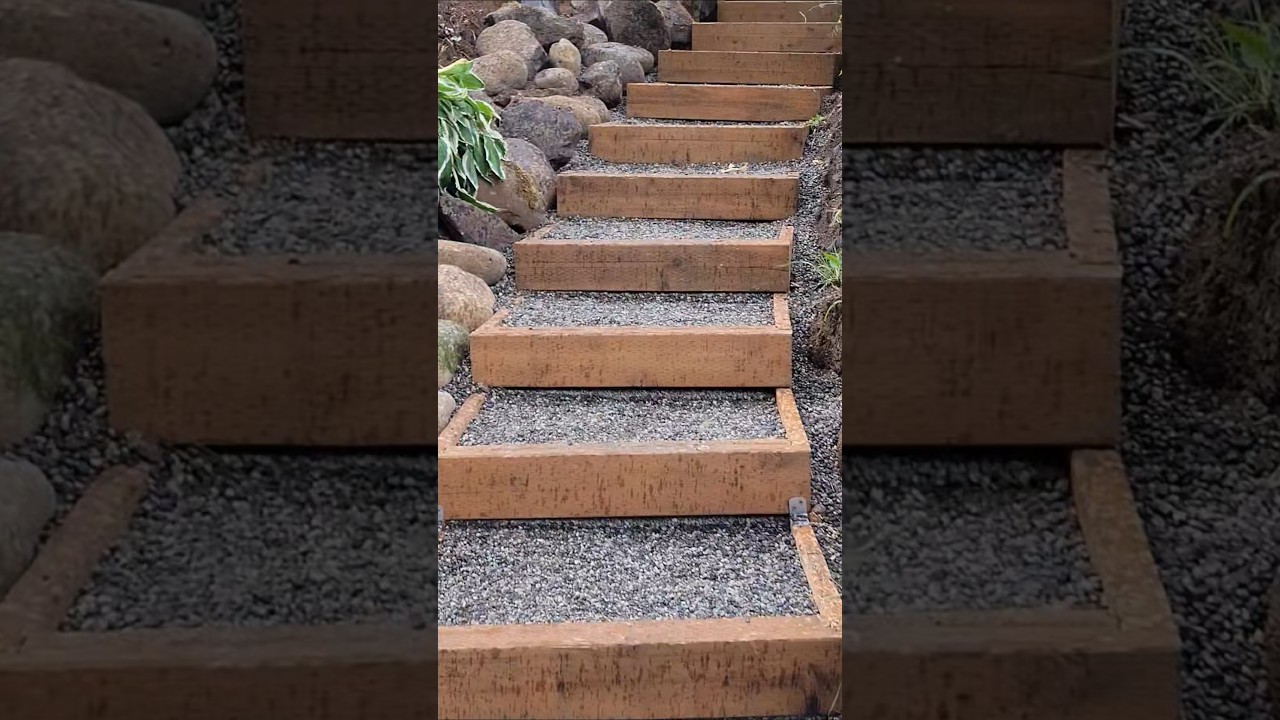
Showing 0:07–0:14 of the source video. Watch the full video with every moment.
What happens in this clip
Determine your desired rise (height) and run (depth) for each step. Typically, a rise of 6-7 inches and a run of 12-18 inches is comfortable. Place the second timber riser above and behind the first, maintaining the chosen rise and run. Use your level to ensure it's horizontal. Secure this timber with rebar stakes. The area between the first and second timbers forms the tread. Line this area with landscape fabric to suppress weeds. Then, fill the tread with pea gravel, spreading it evenly and compacting it firmly with a hand tamper or your feet. Repeat this process for all subsequent steps, progressively moving up the slope. For enhanced stability, especially on wider stairs or turns, use L-shaped metal brackets at the corners of timbers and secure them with screws or nails. Continue until all desired steps are constructed.
Goal: Form the stair structure with risers and gravel treads
What's used
Tools
- Drill
- Hand Tamper
- Landscape Fabric
- Level
- Measuring Tape
- Metal Brackets (L-shaped)
- as seen in the video.
- Pea Gravel
- River rock (smaller sizes)
- Rebar Stakes
- Screws/Nails
- Sledgehammer
- Wooden Timbers
About the full video
This project involves constructing a set of durable and aesthetically pleasing outdoor stairs using wooden timbers for risers and filling the treads with pea gravel. The design is ideal for navigating sloped terrain and integrates naturally with the surrounding landscape, often incorporating large rocks for a rustic look.
What's said in this clip
Here's our uh stairs. Just finished putting the uh pearavevel and all the rocks in.
Automatically transcribed from the source video.
Step 4 of 7: Prepare and Position Subsequent Timbers
For each subsequent step, cut another railroad tie or landscape timber to the desired width. Place this new timber directly behind the first one, creating the next riser. The top surface of this new timber will serve as the tread for the step above it. Ensure the spacing between the timbers maintains the planned run for your steps. Use a level to ensure each timber is horizontally true and that the rise between steps is consistent.
Every video in How to Build Backyard Steps with Railroad Ties or Landscape Timbers
Step 1: Plan the Step Location and Dimensions
- 0:01–0:43 Plan and Measure Embankment
- 0:01–0:59 Site Assessment and Initial Clearing
- 0:03–0:58 Site Assessment and Step Calculation
Step 2: Excavate for the First Step
- 2:30–4:03 Position, Level, and Anchor First Step
- 1:14–1:29 Position and Level Ties
- 1:28–2:20 Dig Trench and Level First Base
Step 3: Cut and Position the First Timber
- 1:14–1:29 Position and Level Ties
- 2:30–4:03 Position, Level, and Anchor First Step
- 0:00–0:02 Cut Wooden Timbers for Risers
Step 4: Prepare and Position Subsequent Timbers
- 2:15–4:00 Assemble and Secure Step Timbers
- 1:14–1:29 Position and Level Ties
- 0:07–0:14 Construct Remaining Steps and Treads (this video)
Step 5: Secure the Timbers
- 6:06–7:11 Secure Timbers with Rebar Stakes
- 5:11–5:36 Anchor First Timber Layer with Rebar
- 1:21–1:55 Anchor the Base Timber with Rebar
Step 6: Backfill and Compact
- 20:20–22:50 Backfill and Level the Ground
- 2:36–2:57 Install Geotextile and Backfill
- 14:20–15:54 Backfill the Wall
Step 7: Add Finishing Touches and Test Stability
- 8:40–9:55 Inspect and Refine Staircase
- 0:26–0:30 Final Inspection and Cleanup
- 0:14–0:24 Final Grading and Finishing
Questions about How to Build Backyard Steps with Railroad Ties or Landscape Timbers
What are the essential tools needed for cutting the heavy railroad ties or landscape timbers?
A powerful chainsaw is highly recommended for efficient and clean cuts on thick railroad ties and landscape timbers. Always ensure the chain is sharp and use appropriate safety gear like chaps, gloves, and eye protection. A circular saw may work for thinner landscape timbers but will struggle with railroad ties.
What safety precautions should I take when working with creosote-treated railroad ties?
Used railroad ties are often treated with creosote, which can irritate skin and eyes and is harmful if ingested or inhaled. Wear heavy-duty gloves, long sleeves, safety glasses, and a dust mask or respirator. Avoid burning creosote-treated wood, as the fumes are toxic, and check local regulations for disposal.
How difficult is this project for a beginner, and what's a realistic time commitment?
This project is rated as beginner-friendly, but it involves significant physical labor, including heavy lifting and digging. Realistically, plan for about three full days of work, especially if you're working alone or need time for material transport and site preparation. Taking time for precise measurements and proper compaction is crucial.
What are common mistakes beginners make when building these steps, and how can I avoid them?
A common mistake is inadequate site preparation, such as not creating a level, compacted base, which leads to unstable steps. Another error is not securing timbers sufficiently; always use rebar stakes and lag screws to prevent shifting. Also, ensure proper drainage to avoid water accumulation and erosion.
Can I use untreated lumber instead of railroad ties or treated landscape timbers for this project?
Untreated lumber is not recommended for ground contact as it will quickly rot and decompose due to moisture and insects. For longevity and structural integrity, always use materials rated for ground contact, such as pressure-treated lumber (specific for ground contact) or naturally rot-resistant wood like cedar, though these may be more expensive.
How do I ensure the steps remain stable and don't shift or sink over time?
Stability is achieved through several key steps: a properly excavated and compacted gravel base for each timber layer, overlapping timbers for strength, and securing each timber with long rebar stakes driven deep into the ground. Adequate drainage and backfilling with compacted soil also prevent erosion and shifting.
How to Build Backyard Steps with Railroad Ties or Landscape Timbers
Outline for building backyard steps using railroad ties or landscape timbers. This involves planning, site preparation, cutting and fitting timbers, securing them, and ensuring stability and safety.
Read the full guide Browse all guides
Planning this project? Shop Oak Valley Designs.

Subscribe for exclusive updates
Be the first to know about promotions, new products, and sales.