
Stair Tread Sizing
About This Guide
Getting your stair tread dimensions right is the crucial first step in any easy DIY stair remodel. It ensures a safe, comfortable, and beautiful result, giving you the perfect foundation to elevate your staircase with style and peace of mind.
Tools & Materials

Steps
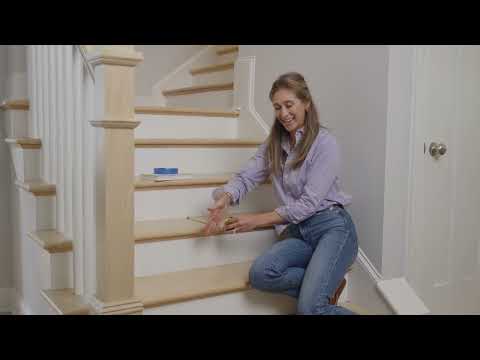
Measure Your Tread Depth
To ensure safety and a perfect fit, use a tape measure to find the distance from the very front edge of a step (this overhang is called the 'nosing') back to the vertical board (the 'riser'). Getting this number right is essential for ensuring your foot has plenty of room, which is a cornerstone of stair safety. This measurement is your guide for a perfect fit.
Measure Your Tread Run
The 'tread run' is the horizontal distance from the front edge of one step's nosing to the vertical face of the riser above it. Think of it as the flat, usable stepping surface. For a comfortable and natural walking rhythm up and down your stairs, it's important that this measurement is the same for every single step.
Determine Your Ideal Tread Width
The width is simply the measurement from one side of the step to the other—for example, from the wall to the railing. While this is usually set by your staircase's structure, knowing the exact width is vital. It ensures a clean, professional look and is fundamental for safe passage, especially when carrying items or for families with children or pets.
Factor in the Nosing for Total Depth
The total tread depth is a combination of the 'run' you measured in Step 2 plus the 'nosing'—that part of the tread that hangs over the riser below. Building codes typically require this overhang (usually between 3/4 inch and 1-1/4 inches) because it adds crucial space for your foot, preventing slips. The formula is simple: Total Tread Depth = Actual Tread Depth + Nosing. This is how you achieve a professional, safe result.
Check Your Staircase's Overall Balance
This is a pro-level check that gives you ultimate peace of mind. Calculate the total horizontal distance your stairs cover (the 'total run') and the total vertical height from floor to floor (the 'total rise'). A well-built staircase will have a consistent relationship between these numbers. This step helps you spot any major inconsistencies that might make the stairs feel 'off' or unsafe, ensuring your project is built on a solid foundation.

Apply the Stair-Building 'Comfort Formula'
Here’s a secret from the pros for ensuring a comfortable stride. The formula is: 2 x (Riser Height) + Tread Depth = 24 to 25 inches. This simple calculation helps guarantee that your stairs aren't too steep or too shallow, making them safer and more pleasant to use for everyone, from kids to grandparents. Checking your measurements against this rule is a fantastic way to ensure your DIY stair remodel achieves a truly professional feel.
Questions about your project or which product fits? Oak Valley Designs's team is happy to help. Mon–Fri 9–5 ET

Subscribe for exclusive updates
Be the first to know about promotions, new products, and sales.