
Measure Total Vertical Rise
From How to Find the Angle of Your Stairs · Step 1 of 3 · Video by stairbuilding
Showing 0:01–0:28 of the source video. Watch the full video with every moment.
What happens in this clip
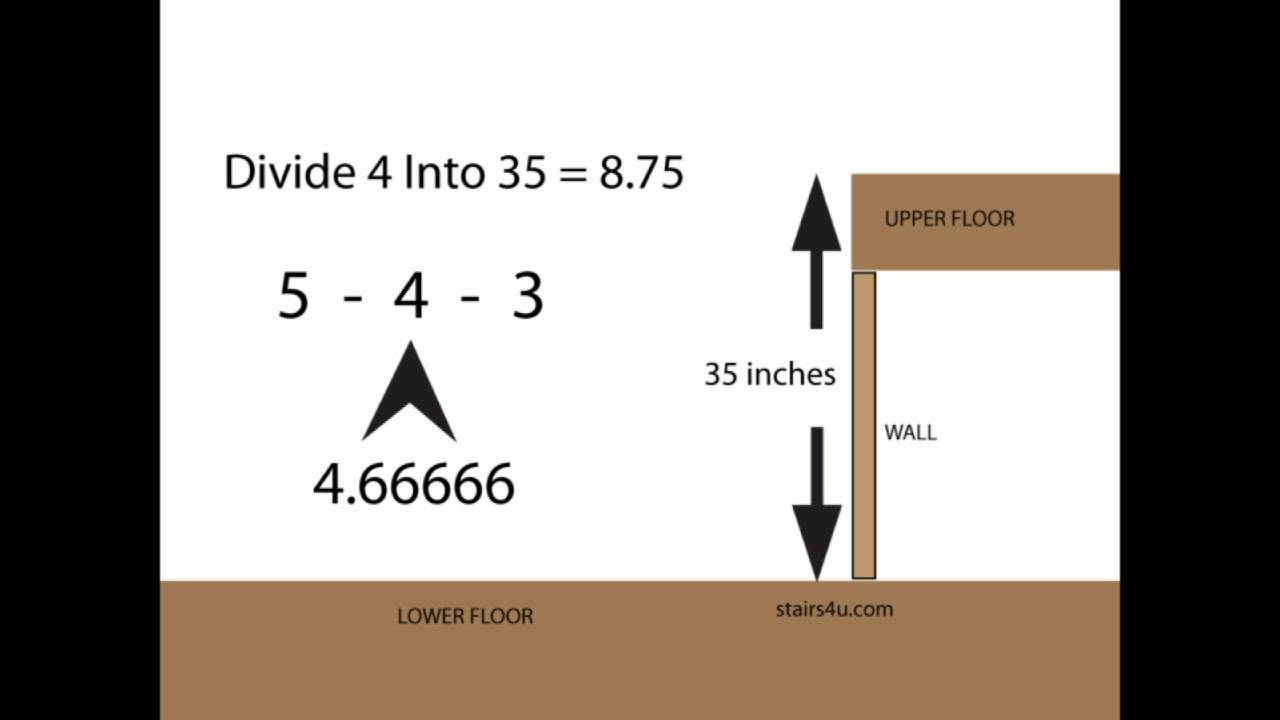
Accurately measure the vertical distance from the top surface of the lower floor to the top surface of the upper floor where the stairs will connect. This measurement is crucial for all subsequent calculations. For this example, a total rise of 35 inches will be used.
Goal: Obtain the exact vertical height between the two floor levels
What's used
Tools
- Measuring Tape
- Yard stick
About the full video
This instructional guide details the process of accurately calculating the number and individual height of stair risers, ensuring they meet building codes for safety and comfort. The method involves measuring the total vertical rise, estimating the number of risers using an average height, and then testing different whole numbers of risers against the total rise to determine compliant and comfortable individual riser heights.
Step 1 of 3: Measure the total rise of the staircase
Using a tape measure, accurately determine the total vertical distance from the finished surface of the lower floor to the finished surface of the upper floor. This measurement is the total rise of the staircase.
Every video in How to Find the Angle of Your Stairs
Step 1: Measure the total rise of the staircase
- 0:15–0:29 Measure Total Rise
- 2:54–4:34 Determine the Total Rise
- 0:01–0:28 Measure Total Vertical Rise (this video)
Step 2: Measure the total run of the staircase
- 2:54–4:47 Measure Straight Stairs
- 0:15–0:29 Measure Total Rise
- 2:06–3:02 Measure Total Run
Step 3: Calculate the stair angle
- 0:31–1:14 Retrieve Default Stair Parameters
- 0:00–0:35 Understand and Calculate Stair Angles
- 1:21–2:07 Determine Staircase Angle
How to Find the Angle of Your Stairs
This project outlines the process for accurately determining the angle of existing stairs, which is often needed for repairs, renovations, or when building new stairs to match existing ones. The process involves taking precise measurements of the stair's rise and run and then using trigonometry to calculate the angle.
Read the full guide Browse all guides
Planning this project? Shop Oak Valley Designs.

Subscribe for exclusive updates
Be the first to know about promotions, new products, and sales.