
Dig Trench for First Step
From How to Build Stone Steps in a Garden · Step 1 of 6 · Video by This Old House
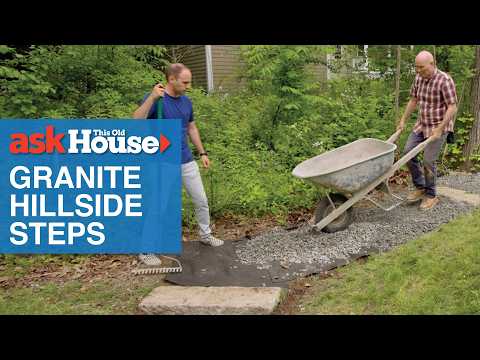
Showing 2:40–3:36 of the source video. Watch the full video with every moment.
What happens in this clip
Excavate the marked area to create a trench for the first step. The depth of the excavation should be at least 12 inches to allow for adequate gravel base and proper embedding of the granite step. While digging, clay soil is encountered, which is noted as a solid and desirable base for stability. Continue digging until the desired depth and a relatively flat, solid base is achieved.
Goal: Excavate the marked area to a depth of at least 12 inches, reaching a solid clay base, to prepare for the first granite step.
What's used
Tools
- Shovels (Long and Short Handled)
About the full video
This project details the construction of a stable and well-drained substructure for a granite hillside walkway. It involves excavating the soil, creating a compacted gravel base for each step, and carefully placing heavy granite steps. The process emphasizes proper drainage and stability to create a safe and durable pathway down a sloping terrain.
What's said in this clip
right. You can have a long handle. All right. I'll take the short. Take that. See that right there, Pete? I do. That's clay. Okay. Okay, so we're down to clay, which is solid stuff. Take this out. We still want to go a little bit deeper. How deep are we going to dig here? So, I normally like to go at least 12 in. Okay. Uh just cuz I want to get the gravel in for drainage.
Automatically transcribed from the source video.
Step 1 of 6: Mark and Excavate the Garden Stone Steps Area
Using stakes and string, mark the precise location and dimensions of your garden stone steps. The width of the steps should be at least 3 feet for comfortable use. Once marked, excavate the area to a depth of approximately 8-12 inches, ensuring the base is level and compacted. This depth will accommodate the gravel base, sand setting bed, and the stone treads.
Every video in How to Build Stone Steps in a Garden
Step 1: Mark and Excavate the Garden Stone Steps Area
- 3:05–4:04 Excavating for the First Step
- 2:40–3:36 Dig Trench for First Step (this video)
- 1:34–2:08 Installing Natural Stone Steps
Step 2: Install Drainage and Gravel Base
- 1:04–2:13 Install and Compact Gravel Base
- 3:56–4:56 Add and Compact Gravel Base
- 4:04–5:08 Adding and Compacting Gravel Base
Step 3: Prepare the Sand Setting Bed
- 0:15–0:20 Prepare Paver Sand Bedding Layer
- 3:56–5:12 Level Sand Bed & Lay Stones
- 0:58–1:26 Screeding the Sand Setting Bed with Bars
Step 4: Select and Lay the Stone Treads
- 1:29–1:52 Place the First Tread with a Bullnose
- 0:24–0:34 Install Natural Stone Steps
- 0:13–0:21 Install Black Hills Natural Stone Steps
Step 5: Install Risers and Fill Gaps
- 1:52–3:00 Build Subsequent Risers and Place Treads
- 0:13–0:34 Construct Subsequent Tiers of Steps
- 4:27–5:17 Install Filler Stones and Rebar
Step 6: Finishing Touches and Site Cleanup
- 0:26–0:30 Final Inspection and Cleanup
- 15:13–17:09 Review and Final Touches
- 7:25–9:32 Backfill, Finalize, and Cure
Questions about How to Build Stone Steps in a Garden
Is building garden stone steps truly a beginner project, and how long should I expect it to take?
While labeled beginner, this project involves significant physical labor like excavation and lifting heavy stones. The estimated 7 days is a general guide; your timeline may vary depending on the size of your steps, soil conditions, and your personal pace. Take breaks as needed and do not rush the crucial foundation work.
Why is proper drainage so crucial for stone steps, and what happens if I skip it?
Proper drainage prevents water from accumulating under your steps, which can lead to shifting, cracking, and eventual failure, especially in freezing climates. A well-installed gravel base and good site grading direct water away, ensuring the longevity and stability of your steps. Skipping drainage often results in uneven, unstable steps that require premature repairs.
What type of stone is best for garden steps, and can I mix different types of materials?
For durability and safety, choose stones that are dense, slip-resistant, and relatively consistent in thickness, such as natural flagstone, bluestone, or pre-cast concrete pavers. While you can mix stone types for aesthetic appeal, ensure they have similar structural properties and consistent dimensions to avoid creating trip hazards and to simplify leveling during installation.
What's the most common mistake beginners make when building garden stone steps?
A very common mistake is not compacting the base layers (soil, gravel, sand) sufficiently. Each layer must be thoroughly compacted to create a stable, non-shifting foundation for your steps. Inadequate compaction will lead to settling, uneven steps, and potential structural failure over time, requiring significant rework.
Beyond a basic shovel, what specialized tools are essential for this project?
A pickaxe is invaluable for breaking up tough soil and roots during excavation. A tamper or plate compactor (often rentable) is crucial for compacting the base layers effectively. Additionally, a long level and mason's string line are vital for ensuring your steps are straight, level, and have a consistent rise and run.
What safety precautions should I take when handling heavy stones and excavating?
Always wear sturdy work gloves, steel-toed boots, and eye protection. Use proper lifting techniques by bending your knees and lifting with your legs, not your back, or use a hand truck for very heavy stones. Before any digging, call 811 to have underground utilities marked in your project area to avoid accidental strikes.
What are the main cost drivers for building garden stone steps?
The primary costs will be the stone treads and risers themselves, which can vary significantly by material, size, and type. Other major expenses include bulk materials like crushed gravel and all-purpose sand for the base, and polymeric sand for jointing. Consider tool rental for items like a plate compactor if you don't own one, as this can add to the overall budget.
How to Build Stone Steps in a Garden
This project outlines the steps for building durable and aesthetically pleasing stone steps in a garden. It covers site preparation, foundation, stone selection, laying the treads and risers, and finishing touches. Proper drainage and a stable base are crucial for longevity.
Read the full guide Browse all guides
Planning this project? Shop Oak Valley Designs.

Subscribe for exclusive updates
Be the first to know about promotions, new products, and sales.