Measure and Customize Tape Outline
From how to measure an L-shaped staircase for carpet stair treads · Step 3 of 3 · Video by Oak Valley Designs
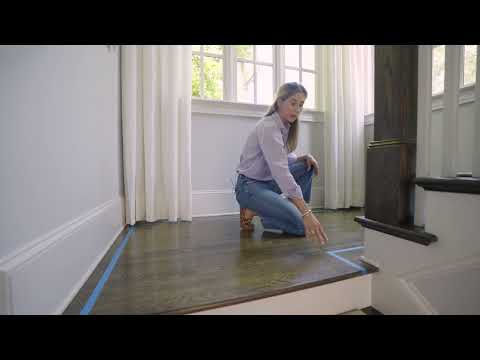
Showing 1:10–1:26 of the source video.
What happens in this clip
With the entire carpet area clearly defined by painter's tape, use a tape measure to take precise measurements of all sides and segments of the blue tape outline. This will provide the exact dimensions needed for ordering or cutting the carpet for the landing. The amount of visible wood flooring between the carpet edge and the walls is a matter of personal preference; some prefer the carpet to be very close to the wall, while others prefer more exposed wood. Adjust the tape placement to reflect this desired aesthetic before taking final measurements.
Goal: Once the full perimeter is taped, measure all segments of the blue tape to finalize dimensions for ordering, noting that the amount of exposed wood is a customizable preference.
What's used
Tools
- Painter's Tape
- Tape Measure
About the full video
This video details the specialized method of accurately measuring a stair landing for carpet installation. It involves using painter's tape to define the carpet's perimeter, ensuring precise cuts and a neat finish that aligns with existing stair treads and accounts for architectural features like posts.
What's said in this clip
How much wood you want here is totally up to you. Some people like to take the carpet very close to the wall and some like to see more wood. That's up to you. And then get your tape measure. You measure all of your blue tape and sides. And that's it. That's how you order your
Automatically transcribed from the source video.
Step 3 of 3: Conquering the Corner: Measuring Your Landing or Winder Steps
This is where your initial identification truly pays off! * **For a Landing:** If your turn features a welcoming landing, simply measure its full width and its full length. You'll treat this as one distinct, custom-sized piece, designed to seamlessly complement your straight stair treads. Remember, for optimal safety and aesthetics, your landing should ideally be at least 36 inches deep and as wide as your stair flights. This ensures a consistent, secure surface. * **For Winder Steps:** If your staircase gracefully navigates the turn with winder steps, each wedge-shaped step is a unique canvas! You'll need to measure each winder individually. For every winder tread, carefully measure its narrow inner edge, its wider outer edge, and its depth. This meticulous approach ensures that your custom Oak Valley Designs treads will perfectly hug each unique shape, providing unmatched safety, stability, and a truly bespoke look. This is how we ensure 'A better way to tread' for every angle of your home.
Other videos for this step
how to measure an L-shaped staircase for carpet stair treads
An L-shaped staircase, often called a quarter-turn, brings unique architectural charm to your home. But when it comes to adding the safety and style of carpet stair treads, its 90-degree turn can seem a little tricky to measure. Don't worry, we're here to empower your DIY journey! The secret to a perfect, custom fit for your Oak Valley Designs treads is to see your L-shaped staircase as three distinct areas: the first straight flight, the turning section, and the second straight flight. The way you approach the turn—whether it's a spacious landing or elegant winder steps—will guide your measuring strategy. For straight sections, you'll precisely measure each tread's width and depth. For a landing, it's one simple, larger measurement. For winder steps, each unique, tapered step gets its own careful attention. And here’s a pro tip for peace of mind: always measure from the *tread edge to tread edge*, never wall to wall. This ensures your custom treads fit beautifully, even if your walls aren't perfectly square, delivering the safety and elegance your family deserves.
Read the full guide Browse all guides
Planning this project? Shop Oak Valley Designs.